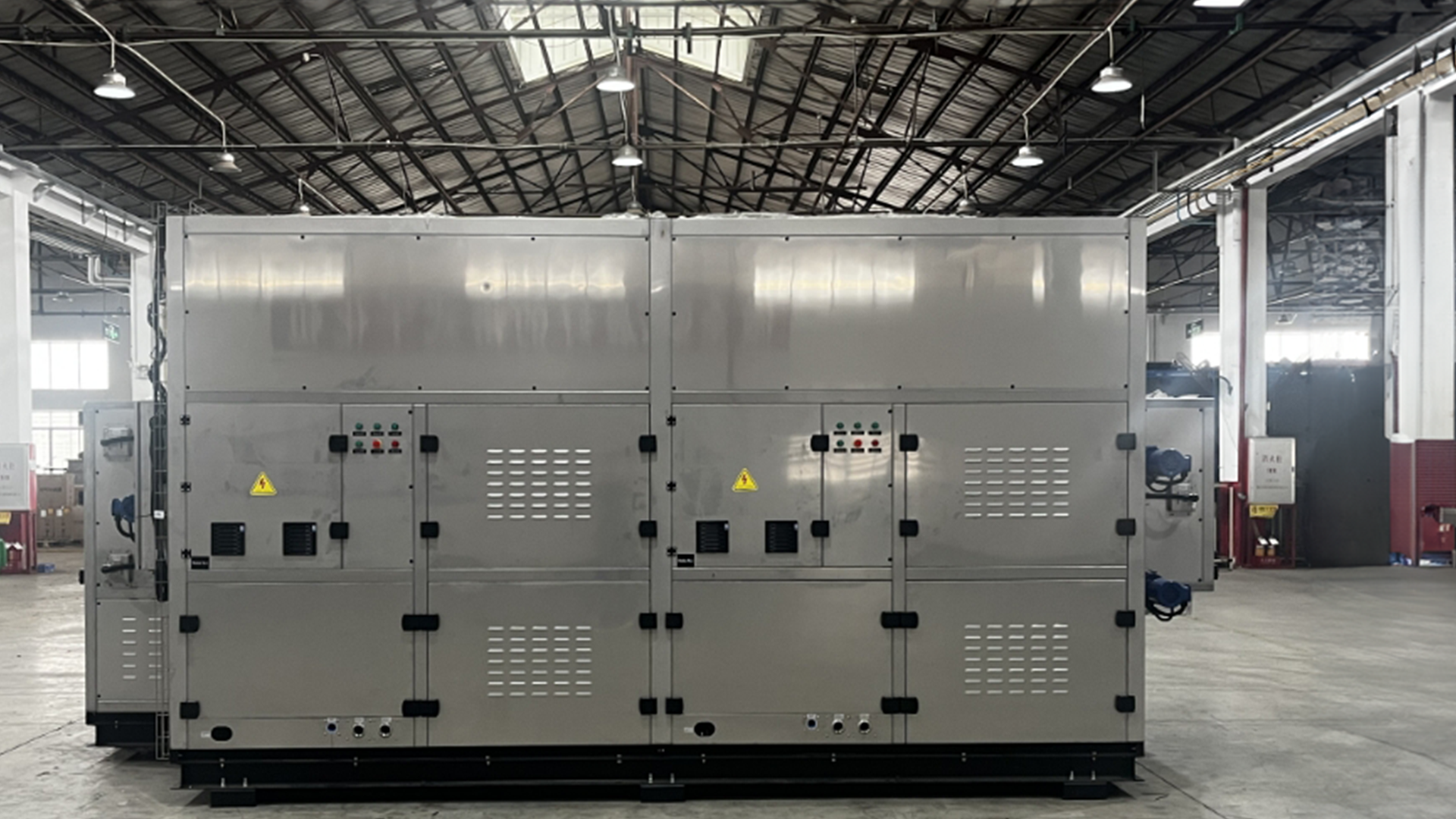
Low-temperature thermal drying for maximum volume and mass reduction of dewatered sludge — the EAHD/EAWD series uses low-temperature hot air (< 70°C) to produce a granulated, stable, safe, and high energy-value final product.
Sludge drying is the final treatment step that reduces dewatered sludge moisture content to very low values (< 15%), transforming it into a dry granulated product, stable and significantly smaller in volume and mass. This product can be used for co-incineration, composting, agricultural use, or energy recovery.
The low-temperature technology (EAHD/EAWD) uses hot air at less than 70°C in a closed circuit, allowing the use of waste heat from other sources (co-generation, solar panels, boilers) and ensuring operational safety — no explosion risk associated with high-temperature dryers.
Dewatered sludge (15–25% TS) is evenly distributed over the dryer's perforated belt.
Hot air (< 70°C) circulates in a closed circuit, passing through the sludge bed on the belt and evaporating moisture.
Humid air is cooled in an internal condenser; condensed water is collected and returned to the treatment process.
Dried sludge (> 85% TS) is discharged as solid granules ready for storage, transport, or valorization.
The low-temperature dryer line offers models for different capacities and energy sources, with full flexibility for integration with co-generation and renewable energy systems.
Low-temperature belt dryer with hot air circulation generated by electric resistance or steam. Most versatile model in the line.
| Air temperature | < 70°C |
| TS output | 80 – 90% |
| Capacity | up to 20 m³/h |
| Energy source | Electric / Steam |
Optimized version for using waste heat from co-generation, anaerobic digestion, solar energy, or other low-cost alternative sources.
| Air temperature | 40 – 70°C |
| TS output | 75 – 90% |
| Energy source | Waste heat |
| Energy efficiency | Very high |
Operating below 70°C eliminates dust ignition risk — maximum safety without the requirements of high-temperature suppression systems.
Integration with co-generation or solar energy systems allows operation on renewable energy — drastically reducing operating costs and carbon footprint.
The 75–80% reduction in sludge volume and mass results in significant savings in transport, landfill, and final disposal costs.
The Sludge Dryer is the final step in the treatment chain, maximizing sludge value for energy or agricultural valorization.
GBT / DAF
3 – 6% TS
BFP / Screw Press
15 – 28% TS
Sludge Dryer
85 – 92% TS
Fertilizer / Co-incineration / Biogas
Cement plants and power stations
Regulated agricultural application
Organic compost generation
High calorific value biomass fuel
Final step in sludge treatment chain
Food, chemical, pharmaceutical
Our team evaluates your sludge characteristics and designs the ideal drying solution for your WWTP.